




Sale ...
Building Relationships in Business
Perceptual mechanisms in the formation of beliefs.
Reality vs. the subjectivity of our world; the importance of the context of information for creating its meaning.
Examples illustrating unconscious ways of shaping the perception of reality and how this image influences individual decision-making processes.
“What game are people playing?” – The hidden strategies that govern our lives.
Discussion of four types of unconscious assumptions used in business and their long-term consequences in each person’s life, in relation to the insights gained during the game regarding personal fears, attachments, and resources for change.

Perceptual mechanisms in the formation of beliefs.
Reality vs. the subjectivity of our world; the importance of context in shaping the meaning of information.
Examples illustrating unconscious ways of forming the image of reality and how this perception influences individual decision-making processes.
“What game are people playing?” – The hidden strategies that govern our lives.
A discussion of four types of unconscious assumptions used in business and their long-term consequences in each person’s life, in relation to the insights gained during the game about personal fears, attachments, and resources for change.
The “Johari Window” model in communication.
The context of the mutual relationship between feelings, experiences, attitudes, intentions, and an individual’s motivations toward others – that is, how we can consciously shape a platform for understanding with others by discovering ourselves and being open to receiving feedback from our environment.
Introduction to the emotional competence development model according to D. Goleman.
Rational intelligence (IQ) vs. emotional intelligence (EQ) and the effectiveness of leadership actions in social relationships.
The role of self-awareness, accurate self-assessment, empathy, and self-control as key conditions for creating effective leadership attitudes and behaviors based on them.
Self-assessment as a strong defense mechanism that can distort self-image and, as a result, block personal development.
D. McLelland’s typology of social motivation – what motivates people to act and what makes them compete?
Achievement Motive, Power Motive and Belonging Motive – in other words, how do I recognise in practice what drives my interlocutor’s life? Keywords for each motivational type – i.e. how to manage relationships with individuals and influence their actions?
Effective Meeting Scheduling
Introduction to scheduling meetings over the phone.
Defining the real purpose of a phone conversation and clearly resolving the conscious or unconscious dilemma of the salesperson: “What is and what should a phone conversation not be?”
Building the right emotional attitude toward phone conversations.
The role of mindset, emotional state, and the salesperson’s actual expectations regarding the anticipated reaction of the client.

The First 21 Words on the Phone.
The role of smoothly trained, customer-encouraging messaging in the first contact as the foundation for further individual modifications by each salesperson. Emphasis on the delivery method (tone of voice, mood, confidence, etc.) as key success factors in the first 21 words – the advantage of the form of information delivery over its actual content.
Challenging Situations in Phone Conversations with Clients.
An inventory of the most common objections communicated by clients during phone conversations, along with other challenging situations that prevent the salesperson from effectively achieving the objectives set for the call.
Strategies and Techniques for Overcoming Objections During Phone Calls.
Development of a list of arguments aimed at neutralizing client objections, along with scenarios for effectively communicating them by salespeople. Practical exercises in new response techniques through role-playing and simulations to test their effectiveness and incorporate them into the behavioral repertoire as a habit.
Ending a Phone Conversation.
Constructively concluding a phone call with a client and assertively obtaining key information for a future meeting.
Networking in Sales
Making participants aware of the possibilities and mechanisms driving both personal brand building and target market development based on available tools using the latest technologies.
Developing effective tools for market building and an action plan for the near future, leading to geometric growth in potential clients within the current database.
Building participants’ confidence in their own abilities to support the execution of planned prospecting activities.

Why doesn’t the potential client base renew automatically? – On the mechanisms in the sales process that cause a temporary decline to turn into a crisis.
What makes the image in the mirror different from the market image? – How to build the foundation for a professional image in the target market that meets the requirements of the 21st century.
Professional arrhythmia or a temporary pause – which personal cognitive, emotional, and motivational patterns support or block functioning in a professional role.
Networking as a key tool for building professional stability – an introduction to an active client acquisition system and the creation of a network of referrals and recommendations.
Networking in Practice – a set of practical exercises and tasks that allow the acquired knowledge to be applied to personal skills.
Transactional Analysis in Sales
Eric Berne’s Transactional Analysis as a skill for diagnosing a partner’s preferred communication position and shaping the final outcome of the relationship by adapting to and assertively enforcing constructive positions.
How to Effectively Build Relationships with Clients During Meetings?
Developing the ability to correct ineffective relationships and deal with “difficult clients.”

You’re OK, but What About Me? – What functioning script in relationships with others is our personal preference and why others treat us the way they do. Four models of self-esteem in relationships with the environment and their impact on the quality of life we lead. The sources of our communication patterns and how we can manage them.
Parent, Adult, and Child – Who’s in Charge of My Life?
What are ego states and how do they affect our communication with others? What do people expect from others and what does it mean for them? Which transactional position is our favorite, and what are its consequences in building relationships with clients?
Effective Communication Strategies with Clients – How to Avoid Being Manipulated?
What does the client really expect from us? Why is adapting to the client’s transactional position a key element in building and maintaining contact in sales? “What games do people play?” – How to shape relationships with others to avoid becoming their victim.
S.P.I.N. Selling Method
The SPIN Method as a tool for turning the sales process into the client’s process of purchasing a service.
Building participants’ awareness of the importance of the emotional process during a client meeting. Developing the ability to conduct a client meeting in a way that transforms the sales situation into a consultation for purchasing a service, with full control over the process.
The SPIN Method as a framework for conducting the service sales process in a way that prevents the client from questioning their needs in this area by using a sequence of questions that allow them to view the situation from a different perspective than before.

Situation, or the contextual conditions in which a specific client finds themselves, defining their negotiating position.
Problem, or potential threats that may randomly occur, leading to a disruption of the client’s status quo and potentially putting the achievement of their goals in doubt.
Implications, or the negative consequences that are direct results of a problematic situation over time, i.e., crisis situations that arise from failing to attempt to find a solution to the previously defined problem.
Guidance, or a set of actions and decisions taken in advance that will serve as a remedy for the negative consequences of a potential crisis situation.
Sales Mastermind Group
Meeting Objective:
- Creating a communication platform that allows for the creation and testing of innovative ways to reach new clients and increase portfolio value in a safe environment.
- Fostering a spirit of teamwork among homogeneous sales groups, which will become a lever for increasing each agent’s personal professional aspirations.
- Reframing the perception of crisis situations into opportunities and possibilities they bring, and building personal courage to boldly turn them into income-generating opportunities.

Meeting Format:
The meetings take the form of focused, open discussions, sharing best practices, and generating ideas based on five key principles: confidentiality, honesty, accountability, support, and creativity.
The methods for overcoming difficulties and proposed goal achievement strategies derived from this will be reflected upon and discussed in the forum.
Next, a selected pair of participants will practice the discussed solutions, while the rest of the group participates as observers, who will later share feedback at the end.
During the session, a list of specific conclusions will be created, which will serve as a reference point for the participants’ future actions. Each participant will choose one practice to implement between sessions.
At the next meeting, participants will start by discussing specific business cases that served as the basis for practicing new sales methods.
Method of Implementation:
To ensure maximum effectiveness of development activities, we propose basing them on the MASTERMIND session model conducted online. Both the form and the structure of the meetings are characteristic of this model.
Meeting Structure:
Sessions should take place at intervals agreed upon and accepted by all participants (e.g., every two weeks, on Wednesday at 10:00 a.m.). No more than 12 to 16 participants take part in each session. Each session lasts approximately 1.5 to 2 hours.
Participants should be selected based on a strong motivation to participate in the project.
Each session includes the following elements:
- Participant status updates
- Key challenges
- Discussion of best practices and exercises for specific behaviors
- Contracting the implementation of solutions
- Inspiration
Sales Decoded Anew
Meeting Objective:
- To build an adequate perspective that allows participants to update their professional situation in terms of both opportunities and threats.
- To motivate participants to increase their professional activity through new forms of client interaction and to change established patterns of building personal income.
- To foster personal courage to boldly face the challenges that come with both professional and personal life.

Scope of Content:
Film titled “My Life” – about how the scripts written for us in early youth can shape the current picture of our lives.
Victim or Leader? – On conscious and unconscious decisions that are consequences of personal behavior scripts in crisis situations and their impact on the strategies we pursue in our lives.
Buying Strategies and the Sales Code – How the current market situation has influenced our clients’ purchasing preferences and patterns, and which relationship-building models with clients work in times of change.
The Persuasion Process in Insurance Sales – The structure of the process and types of questions in insurance sales that lead to the decision to purchase.
Self-Control and Self-Discipline – Our Best Friends in a Crisis – On how to shape cognitive, emotional, and behavioral patterns that, instead of holding us back, will drive our success in both personal and professional life.
Inspiration, Motivation, and Determination – The Secret Ingredients of Effective Personal Leadership in Turbulent Times.
7 Habits of Effective Selling
How to Achieve Your Dreams Despite Circumstances
Meeting Objectives
- Presenting to participants the key mechanisms shaping an individual’s motivational profile and discussing ways to consciously influence them.
- Discussing methods to “ignite” oneself into action in situations where confidence is lacking, and motivation decreases.
- Creating a personal vision and action plan for the upcoming quarter that incorporates the presented rules and principles of self-motivation.

Scope of Content
First, we create habits, then habits create us – patterns of thoughts, emotions, and behaviors formed in the early stages of development can bind us in adulthood.
Procrastination and other obstacles on the path to our goals – how to deal with internal limitations and barriers that stand in the way of living the life we truly deserve.
Barriers in Communication – Barriers within us, meaning our internal limitations that block access to our personal potential and prevent us from reaching our full capabilities, both in life and professionally. A set of exercises aimed at gaining insight into stereotypical and often unconscious strategies that determine the quality of our relationships with others, along with a discussion on ways to influence them.
David McClelland’s Model of Social Motives – the latest theory in social psychology in the field of motivation, explaining how to achieve intended goals and identifying potential areas for individual development.
Shopping Strategies and the Sales Code – about how the current market situation has influenced the purchasing preferences and patterns of our clients, and which relationship-building models with customers are effective in times of change.
The Persuasion Process in Insurance Sales – the structure of the process and the types of questions in insurance sales that lead to the decision to purchase.
7 Habits of an Effective Salesperson – fundamental principles for operating in the insurance business that enable maintaining sales performance and creating a stable and predictable flow of clients.
Business Negotiations
communication without Barriers
Meeting Objectives
- Systematizing the process of preparing for negotiations and making participants aware of why a thorough analysis of both parties’ interests can contribute to creating a platform for agreement.
- Equipping participants with negotiation tools that help enhance personal effectiveness during business negotiations.
- Building awareness of negotiation techniques and tricks used by partners and increasing personal confidence to confront and neutralize manipulation attempts in negotiation processes.

Scope of Content
Preparation for Negotiations – The role and objectives of proper preparation for negotiations. Key issues and stages of preparation, including analysis of both parties’ interests, BATNA, and an appropriate initial offer. The scenario method in building negotiation options.
Negotiation Strategies – Utilizing the Thomas-Kilmann model to define five basic negotiation strategies. Personal preferences vs. the effectiveness of strategies in the context of negotiation – discussion of the risks and benefits of each negotiation strategy and the impact of personal preferences on decision-making during negotiations.
Opening Negotiations – Principles of building a negotiation team and the basic roles within the team. Opening “with an anchor” vs. opening “with issues” – which approach is appropriate when purchasing services. Key elements of an effective negotiation opening
Communication in Negotiations – recognizing the communication styles of the negotiation partner and adjusting your own style to the goals set and the agreement being negotiated.
“Dirty” Techniques – how to recognize and neutralize influence, persuasion, and manipulation techniques used by the partner to gain a negotiating advantage. A set of scenarios for handling difficult negotiation situations. Ways to manage emotions during negotiations.
Positive Thinking in Negative Circumstances
is that even possible?
Meeting Objectives
- Presenting to participants the key mechanisms shaping an individual’s motivational profile and discussing ways to consciously influence them.
- Discussing methods to “ignite” oneself into action in situations where confidence is lacking, and motivation decreases.
- Creating a personal action plan based on the acquired knowledge that, on the one hand, incorporates the presented methods and ways of working on oneself, and on the other hand, is feasible to implement.

Scope of Content
First, we create habits, then habits create us – patterns of thoughts, emotions, and behaviors formed in the early stages of development can bind us in adulthood.
Myths About Positive Thinking – Theory vs. Reality, or what positive thinking is and what it is not, and why our perceptions often lead us astray.
Don’t Believe Everything You Think – a set of methods and tools to direct your attention, calibrate your perception of reality, and stimulate yourself into action in situations when engagement decreases and doubt in success arises.
Procrastination and Other Barriers to Achieving Goals – how to deal with internal limitations and obstacles that stand in the way of the life we truly deserve.
3 Steps to Positive Thinking in Our Lives – how to implement the knowledge gained during the meeting so that it becomes the preferred way of functioning in a demanding environment.
Stress Management
How to Find Emotional Stability in an Unstable Environment
Meeting Objectives
- Making participants aware of the key mechanisms that influence the perception of the environment in which we operate and their impact on our actions.
- Discussing how we create our emotional states and how to regain control over them in unusual situations.
- Presenting the most important self-regulation tools that allow for effective management of stress levels in the body.

Scope of Content:
What Drives Us: The Behind-the-Scenes of Our Behavior – key factors influencing the formation of cognitive, affective, and behavioral patterns that guide us through life like signposts.
The Amygdala and the Frontal Lobe: How to Effectively Influence Your Stress Response – a discussion of the causes and process of the stress response, its short- and long-term consequences for the body, and ‘first aid’ techniques in stressful situations.
Avoidance, Emotions, or Task: How We Deal with Stress – self-diagnosis of typical stress reactions and suggestions for appropriate tools to help control its intensity.
Stress, Its Stages and Structure, and Ways to Overcome It – methods of preventing personal crises and mitigating their effects. Self-diagnosis and techniques for regulating nervous tension. Time and performance pressure, susceptibility to stress, and mindset. Using external pressure to build personal effectiveness.
ToolBox ‘EmployeeCrown’ – a set of methods and tools to help regain stability and balance in the new business environment.
The Foundations of Self-Motivation
How to Ignite Yourself to Inspire Others
Meeting Objectives
- Presenting to participants the key mechanisms shaping an individual’s motivational profile and discussing ways to consciously influence them.
- Discussing methods to “ignite” oneself into action in situations where confidence is lacking and motivation decreases.
- Creating a personal vision and action plan for the next quarter, incorporating the presented rules and principles of self-motivation.

Scope of Content:
First, we create a habit, then the habit creates us – patterns of thoughts, emotions, and behaviors formed in the early stages of development can bind us in adulthood.
David McClelland’s Model of Social Motives – the latest theory in social psychology in the field of motivation, explaining how to achieve intended goals and identifying potential areas for individual development.
5 Methods to Motivate Yourself into Action – a set of ways and tools to stimulate yourself into activity in situations where engagement decreases and doubt in success arises.
Procrastination and Other Barriers to Achieving Goals – how to deal with internal limitations and obstacles that stand in the way of the life we truly deserve.
7 Habits of an Effective Salesperson – fundamental principles for operating in the insurance business that help maintain sales performance and create a stable and predictable flow of clients.
Recruitment and Selection of Agents
What do people look for in a job? – Bread, entertainment, or perhaps constant access to a free coffee bar?
The Perfect Candidate and Why the Reflection in the Mirror Often Leads the Manager Astray?
Who Is Looking for Whom? – A Brief Reminiscence of the Early Premarital Initiatives
On the Superiority of Harpooning Candidates Over Picking Out Old Crabs from a Worn-Out Net

How to Sell the Insurance Industry So That the Candidate’s Phone Doesn’t Suddenly Lose Signal?
Entrepreneurship vs. the Safe Status Quo – How to Separate the Healthy Grain from the 95% of the Pleasant Majority
Overcoming Candidates’ Objections, or Why It’s Sometimes Worth Convincing Yourself First
The Most Common Reasons for Refusal, or When the Prospect of a New Boss Is More Dissuading Than Modest Earnings
Negative Selection – If You Have Doubts, Then There Are No Doubts
What Kind of Agent Do You Need?
Defining the profile of the ideal candidate for an agent, in conjunction with the manager’s profile and the profiles of the people currently working in the team.
Defining the Target Group
Assigning the desired profile to a specific social and professional group in the Polish market. Identifying its strengths and weaknesses in the context of performing the role of an insurance agent.
Setting the Recruitment
Map Where and to whom to present the job offer for an insurance agent position
Sources of Active Recruitment
Creating an inventory of the maximum number of recruitment activities to ensure access to the largest possible pool of potential candidates.
Candidate Objections
Diagnosing candidate objections and constructive ways to overcome them.
Methods of Candidate Evaluation
Introduction to the professional competency model. How to objectively assess candidates for the agent role? How to avoid common mistakes in evaluation?
Career in Insurance
Methods of conducting negotiations in the context of selling an insurance career. The role of the manager and the importance of their values and attitudes in the recruitment process.
Effective Onboarding of an Agent
The List of 100 – A Story About the Miraculous Expansion of the Candidate’s Modestly Sized Family
The First Client Visit – The Inaugural Jump with a Fire Extinguisher at the Start of a Parachuting Course
The Phone Book and Subscriber Directory – A List of Mandatory Tortures, Often in Alphabetical Order
The Curse in St. Anthony’s Chain, a Guarantee of Success in Getting Further Referrals from Clients

Sincere willingness – the precious qualities of a young adept, or an inevitable harbinger of impending disaster?
Sincere Intentions – Valuable Qualities of a Young Apprentice or an Inevitable Harbinger of Impending Failure?
Memories from the Back Row, or Why the Class Dunce Doesn’t Raise Top Students?
How Not to Throw the Preschool Out with the Bathwater – A Premarital Course Essentials for Hobbyist Fathers
If he does not love, at least he is afraid? – a treatise on authority and how to enforce it on the young fry
If They Don’t Love, Do They at Least Fear? – A Treatise on Authority and How to Enforce It on the Young Recruits
Manager Profile
Manager’s competencies vs. agent’s competencies. Leadership types and styles and their practical consequences for the process of developing others.
Developing an agent’s competence
Building a career path. Phases of the learning process and milestones for acquiring practical skills.
Agent induction and development in the profession
A model process for an agent’s induction into the profession. Stages of agent entry into a diverse team in terms of potential. Application of a unified matrix for agent induction into the business.
Organising the agent’s work
Effective organisation of an agent’s working time. How to manage an agent’s activities in order to achieve maximum business efficiency and satisfaction with his/her profession. Managerial influence tools on the quantitative and qualitative aspects of the sales process. Boundary conditions for team effectiveness and synergy building in its diverse environment.
Segmentation and calculation of market potential
Solving prospecting tasks. Working on activities. Performance indicators. Scene album. Optimising elements of a telephone call.
Organising the trader’s agent
Tools for influencing the sales process. Conditions for agent and team effectiveness. Effective control and coaching.
Monitoring agent activity and performance
Agent productivity and cross-selling. Setting sales and development targets. Planning and performance growth tools. Definition of control standards. Constructive feedback. Motivational interviewing scheme. The art of giving praise.
Pro-team behaviour
Healthy rivalry and competition versus cooperation. Synergy on the basis of diversity of approaches and viewpoints and awareness of common goals. Values and principles in group life. Awareness of one’s role in the team and responsibility for the team’s defining values and principles.
Successful insurance sales
You and your customer – a communicative system of communicative vessels, or a game of deaf telephone?
What does the customer really buy and why does your product not have to be a primo?
The customer’s personal needs and motives map the salesperson in an unknown land.
How do you manage the customer’s emotions and make them happy in the process?

Is the customer able to hear more than the sweet melody of their benefits?
How do you ask so that the customer answers uncomfortable questions for themselves?
Customer objections – legs under the belt or an invitation to dance?
How do you make it so you don’t have to sell and the customer can buy?
The real sources of objections – how to stop persistently getting customers to say no?
How to sell to make customers feel lonely without you?
Psychological aspects of the sales process
Transactional analysis as a method of building effective customer relationships. The model of the six fundamental human needs and its implications for the customer decision-making process. Contact avoidance methods and defence mechanisms that stand in the way of gaining agreement with the client.
Sales process versus buying process
Difference between the sales process and the buying process. Building the customer’s need to buy. Defining the customer’s dominant buying strategy. The structure and types of questions in sales leading to an insurance purchase decision. Building desired emotional states in the customer during the buying process.
Effective solution presentation
Structure of an effective sales presentation. Building an effective presentation based on images and words. Benefit language in the process of justifying customer choice.
Customer objections – opportunity or threat in the sales process?
Types and kinds of objections when making a purchase. Methods of building consensus based on effective argumentation. Leading the customer to an informed purchasing decision.
Confidence building
in professional and private relationships
Meeting objectives
- To make participants aware of the key mechanisms influencing self-perception in relations with the environment.
- To discuss how we can shape the perception of reality around us in order to become a ‘Creator’ and not become a ‘Maker’ of life.
- Outline key tools to effectively influence change in key areas of self-image.

Scope of Content
What governs us, or the backstage of our behaviour – the key factors that shape the cognitive, affective and behavioural patterns that, like signposts, guide us through life.
First you create self-esteem, then it creates you – about one of the most powerful psychological mechanisms shaping our functioning in our environment and how to achieve adequate self-esteem
Inner dialogue – friend or saboteur, behind the scenes of how the inner dialogue is created and methods to change it so that it takes our side in critical situations.
You don’t have to believe everything you think – whether the beliefs we carry within us that create the reality we live in are still valid, and to what extent they support or block our actions.
Breaking through personal development barriers – a set of methods and tools to help you face limiting fears to create a programme of personal change towards the life we deserve.
A Life Full of Time
- Presenting participants with the key mechanisms that shape subconscious actions under the pressure of numerous responsibilities and discussing ways to consciously influence them.
- Discussing methods for segmenting the workday and focusing on tasks in situations where the workload increases and motivation decreases.
- Creating a personal action plan based on the acquired knowledge that, on the one hand, incorporates the presented methods and ways of self-management, and on the other hand, is feasible to implement.

Scope of Content
Why is there a growing mountain of unsolved issues? – Identification of problems in time management. Taking stock of time, analysing your own time management to date. Time thieves and their elimination – applying countermeasures with a view to the future
How does good time management affect the working atmosphere? – Impact of good time management on the self-motivation and emotions of others in our working environment
Time management styles – Identifying one’s own time management style/preference. Developing a style that is optimal for oneself. Valuing time. Prioritising – important things versus urgent things. Analysing one’s own potential and developing effectiveness. The impact of identifying a personal vision and mission on managing one’s time resources.
What is time leverage and how to put it into practice? – The stages of medium and long term action planning. The role of ‘milestones’ and how to set and measure them. Working on a planning sheet.
How to focus on the goal – the secrets of effective people. – Effective task completion. How to strengthen decision-making capacity. Introversion, i.e. feeling in control of your own life and your time. Proper implementation of the week’s plan according to set priorities.
Stress, its stages and structure and ways of overcoming – Crisis prevention and mitigation methods. Crisis management. Self-diagnosis and methods of calming nervous tension. Time pressure and outcome. Vulnerability to stress and mindset. Using environmental pressure to build self-efficacy.
Building Motivation in the Team
Meeting Objectives:
- Creating a platform for exchanging best practices that allow for effectively building relationships in business and life.
- Presenting participants with the key attributes that enable accurate diagnosis of the client’s motivational profile and developing ways and methods for consciously using this knowledge in communication practice.
- Preparing participants for open communication, so they can calmly and attentively face difficult situations when interacting with clients and focus their attention on clear messages related to specific goals.
- Teaching how and with what methods to overcome personal limitations in interpersonal interactions in order to achieve communication freedom and job satisfaction.

Scope of Content:
- First, we create a habit, then the habit creates us – patterns of thoughts, emotions, and behaviors formed in the early stages of development can bind us in adulthood.
- David McClelland’s Model of Social Motives – the latest theory in social psychology on motivation, explaining how to achieve intended goals and identifying potential areas for individual development.
- Effective Team Motivation – how to translate knowledge of social motives into practical skills for motivating team members. A set of exercises allowing participants to solve prepared case studies based on the model of social motives.
- A burnt-out match won’t start a fire – to ignite others, you must burn yourself – 5 methods to motivate yourself into action. A set of tools and methods to stimulate yourself into activity when engagement decreases, and doubt in success arises.
- Procrastination and other barriers to achieving goals – how to deal with internal limitations and obstacles that stand in the way of the life we truly deserve.
- Decision Game: SUPERFARMER – a game that allows participants to experience the basic mechanisms that arise during the execution of long-term projects and learn strategies to overcome them to accomplish the task despite barriers.
- Internal Dialogue – friend or saboteur? The behind-the-scenes of internal dialogue formation and methods that allow us to change it so that it supports us in critical situations.
- Avoidance, emotions, or task: how we deal with stress – self-diagnosis of typical stress reactions and suggestions for appropriate tools to help control its intensity.
- Stress: its stages and structure, and ways to overcome it – methods of preventing personal crises and mitigating their effects. Self-diagnosis and techniques for regulating nervous tension. Time and performance pressure, susceptibility to stress, and mindset. Using external pressure to build personal effectiveness.
Sales Masterclass

Sales decoded anew
Meeting Objectives
- Building an adequate perspective that allows participants to update their professional situation in terms of both opportunities and threats.
- Motivating participants to increase professional activity through new forms of client interaction and to change entrenched patterns of generating personal income.
- Developing personal courage to boldly face the challenges posed by both professional and private life.

Scope of Content
A film entitled ‘My Life’ – about how scripts written for us in our early youth can shape our contemporary view of life.
Victim or leader? – about the conscious and unconscious decisions that are the consequences of a personal script of behaviour in crisis situations and their impact on the strategies we pursue in our lives.
Buying strategies and the sales code – about how the current market situation has affected our customers’ preferences and buying patterns and which patterns of creating customer relationships work in times of change.
The persuasion process in insurance sales – the structure of the process and the types of questions in insurance sales that lead to a buying decision.
Self-Control and Self-Discipline – Our Best Friends in a Crisis – on how to develop cognitive, emotional and behavioural patterns within ourselves that will drive our success in both our personal and professional lives instead of driving us away.
Inspiration, Motivation and Determination – the secret ingredients for effective personal leadership in turbulent times.
Portfolio value enhancement
My financial plan
What decisions do I need to make to ensure that my life will not look the same in 3 years’ time and that my account balance will grow? How will I persevere in these decisions and who can help me and who can effectively hinder me? What will I do when I reach my goals and realise my dreams?
The S-P-I-R method as a tool to reignite the client’s need to purchase insurance products
Building insurance awareness and reinforcing commitment to the buying process by using a sequence of questions to look at the client’s life situation from a different perspective than before.

Potential objections to purchasing financial products
Where do objections come from, i.e. the set of doubts the adviser has, which the client verbalises during the meeting. How to manage the meeting so that objections do not arise at the end of the meeting. Types and kinds of objections when buying a product. Methods of building an understanding based on effective argumentation and leading the client to a purchase decision – scenarios for answering each objection. Ways to deal with stress in a refusal situation.
If not you, then your competitors!
The long-term implications for the stability of an Adviser’s portfolio resulting from not binding a client to the Firm with several products. From dissatisfaction to loyalty – strategies for building a long-term client relationship resulting in a profitable Adviser portfolio and juicy recommendations to a new market.
Summary, or practical application of knowledge from the training
Preparation of a script for a conversation with a client with an upcoming policy anniversary. Conclude the training with a group telephone session to arrange service appointments with clients.
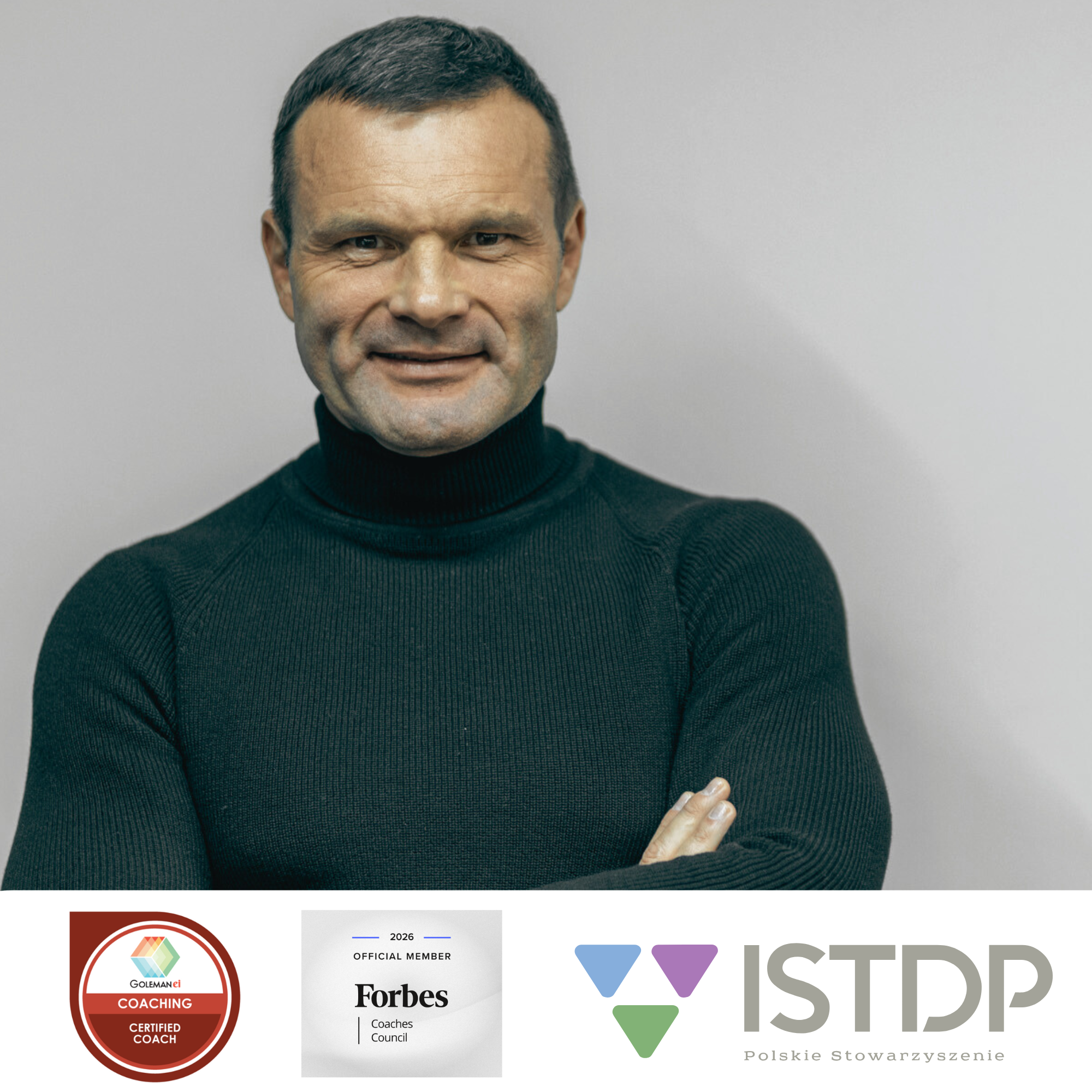
Andrzej is ...
Executive Coach and Leadership Trainer with over 34 years of professional experience in the field of Sales Management and Human Resources Development. A member of the Forbes Coaching Council, the Chamber of Coaching in Poland, and the Polish ISTDP Association.
For over 22 years she has specialized in creating and leading development programs supporting both corporations and individual clients in the area of relationship building based on emotional competencies.
